Blog playbooks
Channel: blogs. Primary persona: Marcus (blog-generation). Connectors: Webflow CMS or Sanity CMS.
Who runs this: content marketers, SEO leads, and founder-marketers who need a steady backlog without a full editorial team. Most teams ship 4 to 6 posts per week in cluster mode.
The motions
- Brief, outline, draft, publish. One input, full pipeline through to a published post with hero image. Marcus orchestrates research → outline → draft → visuals → publish in a single end-to-end run.
- SEO content engine. Keyword-driven backlog. Run Marcus on a queue of topics with internal-link planning across the cluster.
- Repurposing. Shape a published blog into LinkedIn posts and ad copy. Marcus then Luna in sequence.
How Marcus’s pipeline works
Inside the crew, six steps run in order:
- Keyword research. Picks the primary and secondary keywords for the topic.
- Deep research. Pulls competitor blogs ranking for those keywords; extracts angles and gaps.
- Outline. H2 and H3 structure tuned to user intent at the keyword’s awareness stage.
- Draft. Written against your brand voice; uses USPs and offerings naturally; includes citations.
- Visuals. Hero image (Iris-style brand-compliant) and inline diagrams where relevant.
- Publish. Pushes to Webflow or Sanity as
Draft(default) orPublishedbased onstatusinput.
The publish step gates by default. You review the draft inside the CMS, then promote.
Two entry paths
The same Marcus pipeline can be triggered from either:
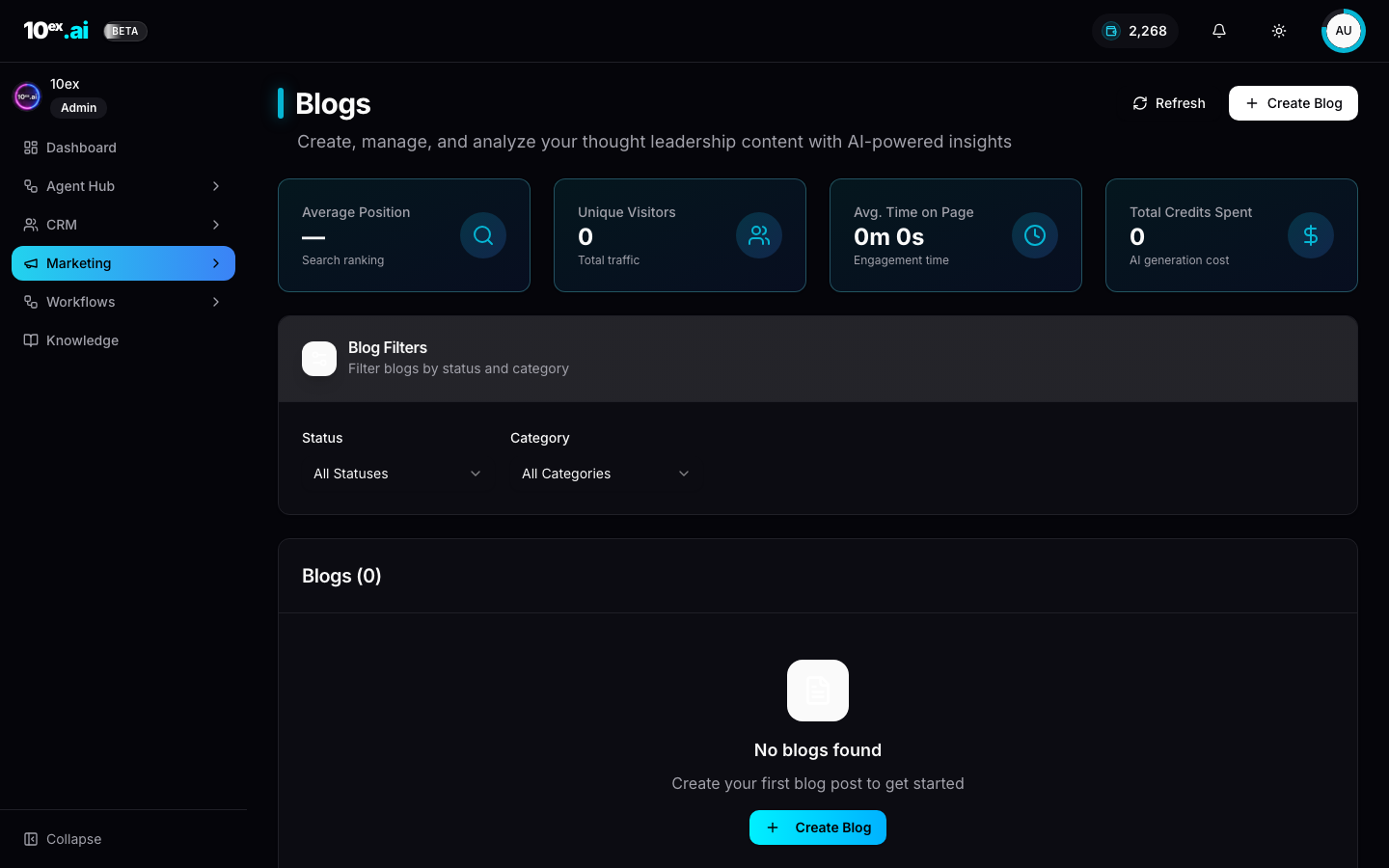
- Marketing → Blogs → Create Blog: the structured wizard (Marketing guide).
- Agent Hub → Hire Marcus: full pipeline including all six steps, no manual editing required.
Use the wizard when you want hands-on editing per draft. Use Marcus when you want hands-off generation across a backlog.
Required brand knowledge
Marcus reads heavily from your brand schema. Make sure these fields are filled before running (Brand knowledge schema):
company_overview: gives Marcus the first-person voice.usps: surfaced as differentiators in the body copy.industry: shapes vocabulary and competitive context.brand_voice: sets tone (witty, formal, candid).- Case Study (one of the 6 onboarding items): Marcus links case studies as social proof when relevant.
What blog cluster mode does
Two mode inputs:
mode: "single": one blog about one topic.mode: "cluster": N blogs on a theme with cross-links between them. Marcus plans the internal-link graph before drafting any post; the result is a content cluster ready for publication in a single batch.
Cluster mode is the default for SEO teams. A 5-post cluster typically lands the pillar in the top 20 within 30 to 60 days on a domain with even modest authority.
What it looks like at the end: five interlinked blog posts published as drafts in Webflow or Sanity, each with a hero image, citations, and a clean internal-link graph. You review and promote.
Connectors
- Webflow CMS: OAuth, needs CMS write permission.
- Sanity CMS: API token plus dataset.
- None: drafts stay in 10ex; you copy and paste manually.
Common pitfalls
- Running Marcus before brand knowledge is filled. The draft ships in a generic voice; revision overhead spikes.
- Cluster size too large on day one. Start with 3 to 5 posts per cluster. Scale only after you’ve reviewed Marcus’s link graph quality.
- Publishing as
Publishedwithout a CMS review. The defaultDraftstatus exists so you can spot brand-voice slips before they go live.
Common questions
Does Marcus write in our brand voice out of the box?
Yes, if brand_voice is filled. Without it, Marcus falls back to a neutral B2B tone.
Can I edit Marcus’s outline before he drafts? Use the wizard path. The Agent Hub path is fully automated; the wizard pauses at outline review.
How does cluster mode plan internal links? Marcus drafts a topical map first, picks one pillar and N supporting posts, then writes each draft with anchor-text plans pointing to the others.
MCP equivalents
generate_blog({ topic: "How to score outbound leads", brand_id, audience_segment_id, target_words: 1500 })
publish_blog({ draft_id, connector_id, status: "draft" })
generate_blog_cluster({ theme: "outbound deliverability", post_count: 5, brand_id })
Related
- Marcus, Blog Generation agent page
- Iris, Webinar Image Generator: same brand-aware visual engine.
- Brand knowledge schema: what Marcus reads first.